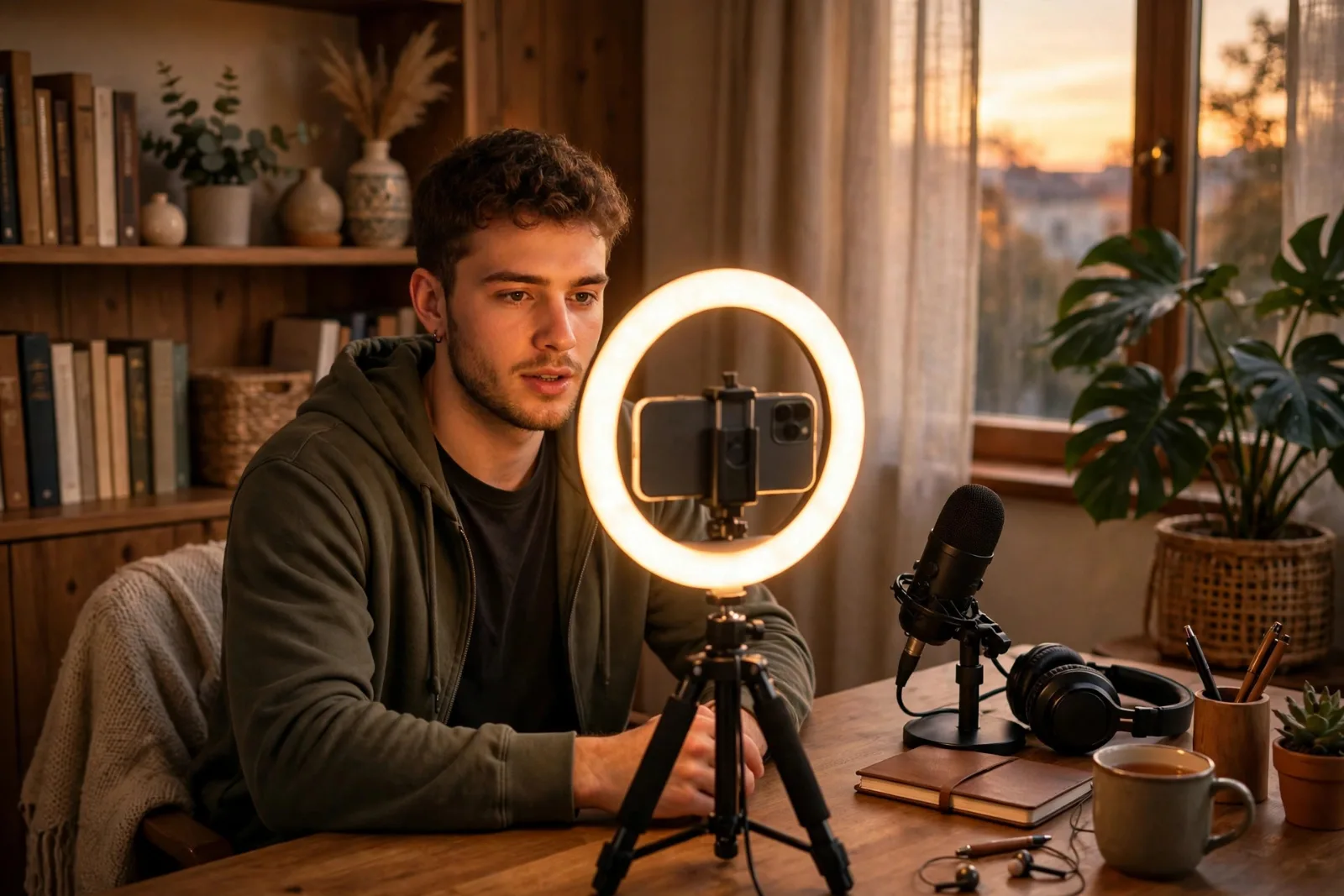
A studio in your pocket
Open YouTube Studio today and a small creator in a one-room home in Dera Ismail Khan, or in a flat in Lahore, or in a village in Waziristan, has something that a television channel needed a building for twenty years ago. A script assistant. A background generator. A dubbing studio that speaks twenty languages. An editor that cuts on a phone. None of it costs what a studio used to cost. Most of it costs nothing at all.
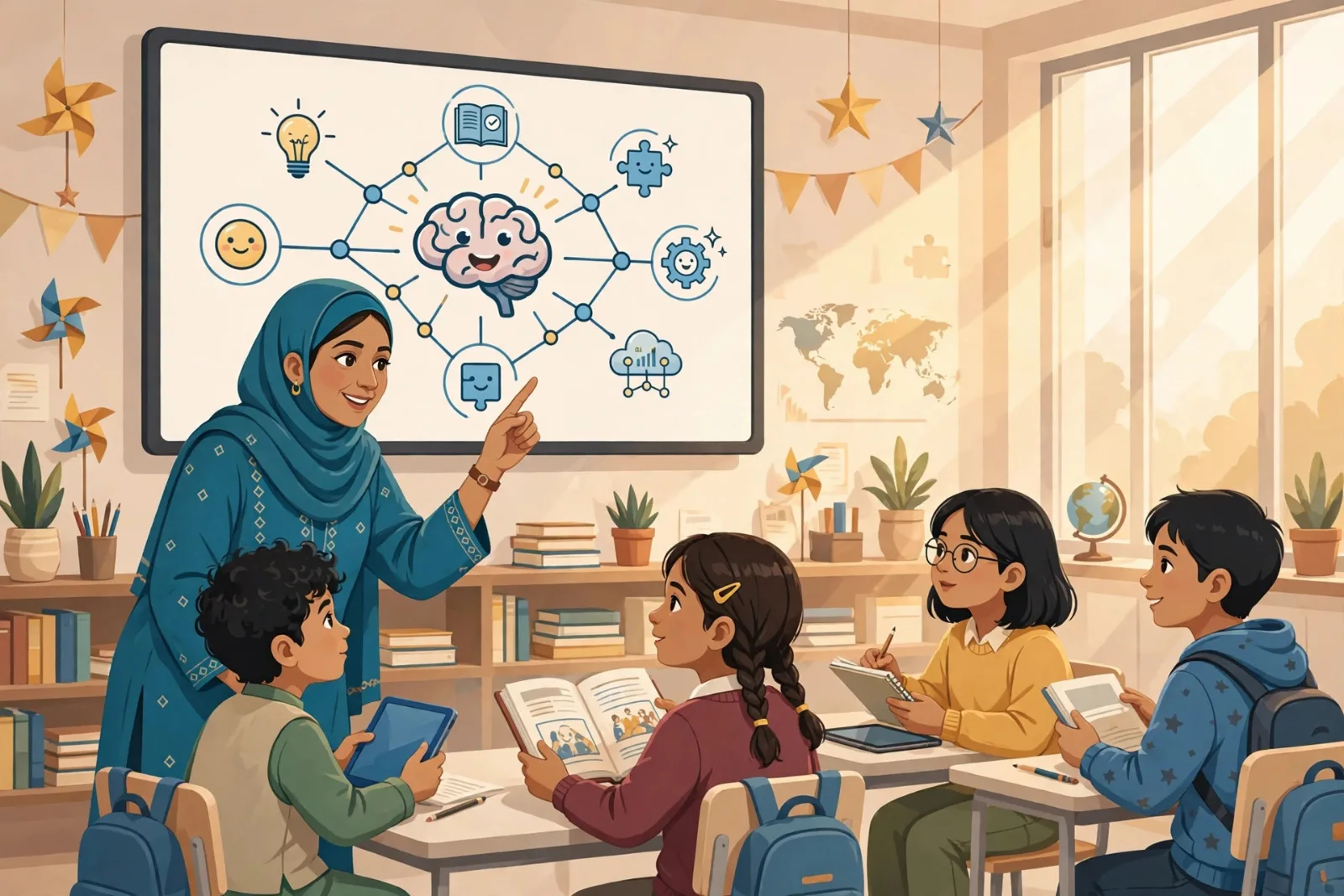
That is the real change AI has brought to YouTube. Not a single magic tool, but the collapse of the cost of making a video look professional. Dream Screen, built into Shorts, turns a typed sentence into a background or a short clip; since February 2025 it has run on Google DeepMind's Veo 2 video model, and everything it makes carries a watermark and an AI label that cannot be removed. Automatic dubbing takes a video recorded in Urdu and gives it English, Hindi, Spanish and a dozen other voices, so a creator no longer needs to speak the audience's language to reach them. The Inspiration tab and Ask Studio in YouTube Studio brainstorm ideas, outline scripts and read a channel's own comments back as suggestions. YouTube Create puts editing, captions, filters and royalty-free music on a phone. For a creator starting with nothing, that is a genuine opening. For a creator already working, it is a warning. Because when everyone gets the same tools on the same day, the tools stop being the advantage.
The half-trillion headline - and the fine print
Goldman Sachs Research put the global creator economy at about $250 billion in 2023 and projected it could approach $480 billion by 2027. It counted roughly 50 million creators worldwide. Read that again, slowly, because the second half of the same research is the part that rarely makes the headline: only about 4 percent of those creators are professionals earning more than $100,000 a year. A separate survey, the 2025 Creator Earnings Report from NeoReach and Influencer Marketing Hub, covering more than 3,000 creators, found that more than half of working creators still earn under $15,000 a year. The market is growing toward half a trillion dollars. The typical creator is not.
That gap is not a contradiction. It is the structure of the business. Platforms, advertisers, toolmakers and the biggest channels take the largest share of a growing market. A new creator enters at the bottom of a ladder that gets longer every year, because AI has made it easier to climb onto the first rung - and harder to be noticed once you are there. Investment follows the same logic: in August 2026, AI video startup Higgsfield raised $400 million at a $5.4 billion valuation, according to the Financial Times, on the bet that businesses, not individual creators, will pay the most for AI video. The money is real. It is just not automatically yours.
What the tools actually do
It helps to be plain about what each tool does, because the announcements blur together. Dream Screen makes backgrounds and short clips for Shorts from a text prompt. It is fast, it is free inside the app, and it is labelled. Viewers will know it is AI. That matters, because a channel built entirely on unlabelled AI clips is building on sand. Automatic dubbing is the quietest and most useful of the lot for a Pakistani creator. A video in Urdu can now carry an English audio track without the creator recording it twice. The feature began with nine languages and has expanded to twenty, including Hindi, Tamil, Telugu and Malayalam alongside the European languages. For a creator whose audience is split between Pakistan and the diaspora, that is not a gimmick. It is distribution.
The Inspiration tab and Ask Studio do the least glamorous job: they answer questions about your own channel. What did viewers ask for in the comments? Which of your last ten videos held people past thirty seconds? What title fits the video you already shot? Used that way, AI is an assistant, not an author. Used the other way - asking it to invent a script about something you do not know - it will happily invent facts, and your audience will eventually notice. YouTube Create, the free mobile editor, matters for a different reason: it removes the last excuse about equipment. A phone, this app, and a quiet room are enough to publish. They were never the hard part. The hard part was always the next video, and the one after that.
The rules moved too
YouTube did not only hand out tools. It also tightened the rules around them, and any creator who ignores the second half will lose the first. Content made with YouTube's own AI tools is labelled automatically. Realistic AI scenes must be disclosed. Channels that re-upload other people's work with light AI changes run into the reused-content policy, which is the rule that most often ends a small channel's monetization. And the bar for earning is rising, not falling: full monetization today requires 1,000 subscribers plus 4,000 watch hours in twelve months, or 10 million Shorts views in ninety days. From 1 February 2027, YouTube will require new applicants to reach 8,000 watch hours or 20 million Shorts views for the same level. The door is open wider for starting, and narrower for earning. That is deliberate.
What it means in Pakistan
Pakistan's creators live inside all of this at once. YouTube's Partner Program operates in Pakistan, so a channel here plays by the same thresholds as a channel anywhere else. The difference is cost: a creator in Pakistan often starts with a phone, not a studio, and AI tools close that gap further than anything before them. An Urdu video dubbed into English can travel beyond the Urdu-speaking audience. A beauty tutorial, a news explainer, a folk story, a farming tip — each can be made at home and watched anywhere. But the same rules apply, and they bite harder where margins are thin. A channel that grows on copied clips, exaggerated health claims or fake promises will not survive review, however good its AI thumbnails look. Trust is the one thing AI cannot generate for you, and in a market where viewers have endless choice, trust is the product.
What actually works
Strip away the announcements and the working routine is unglamorous. One niche, not five. Two or three videos a week, on a schedule viewers can remember. A first thirty seconds that tells the viewer why this video is worth their time. Long videos of eight to twelve minutes when the goal is watch hours, because watch hours are what the Partner Program counts. A human being who checks every script, every claim and every thumbnail before it publishes, because AI drafts and a human publishes - never the other way around. No purchased subscribers, no fake views, no copied videos, no medical or beauty promise the creator cannot stand behind. Those shortcuts do not just risk a strike. They teach the algorithm that the channel is not worth recommending. None of that is new. It was true before AI, and AI has only made it more true, because the tools made everyone faster while the audience's day stayed twenty-four hours long.
The camera is free now. The voice is not.
AI is the new camera. Fifty years ago a camera cost a fortune and decided who could make a film. Then the phone put a camera in every pocket, and the question stopped being who can film and became who is worth watching. AI is doing the same thing to editing, dubbing, scripting and design. The cost of making has collapsed. The cost of being believed has not. That is the honest version of the $480 billion promise. The market will grow. The tools will get better. Most creators will still earn little, a few will earn a great deal, and the difference between them will rarely be the tool they used. It will be the niche they chose, the schedule they kept, the claims they refused to fake, and the audience that learned to trust a voice. A creator who understands that has a real chance. A creator who believes the tool is the chance does not.